
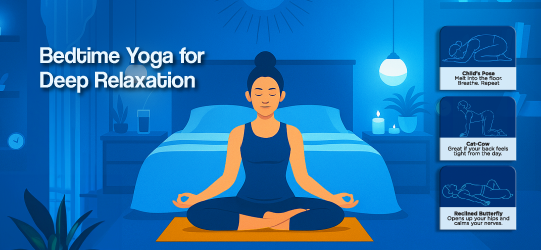
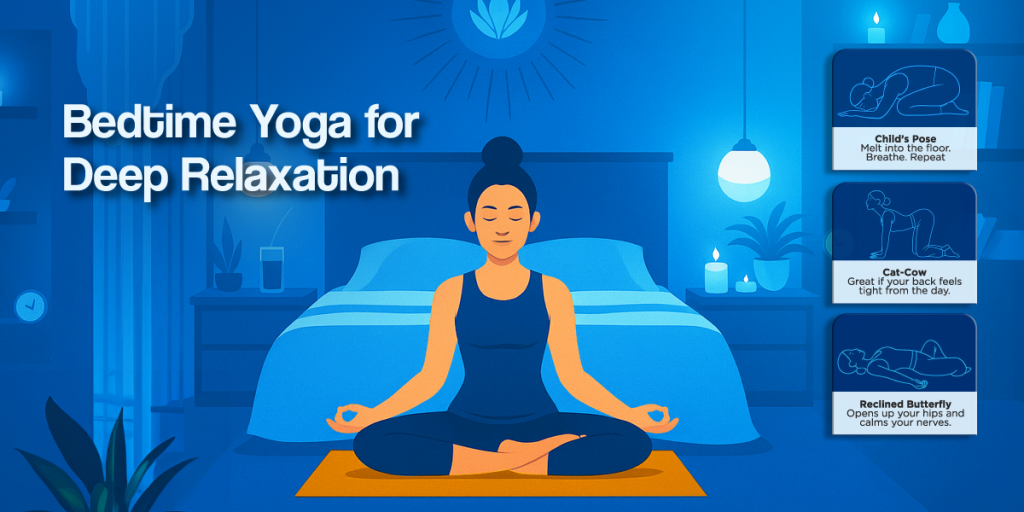
If you are tired of staring at the ceiling every night, gentle yoga poses for sleep can become a quiet ritual at the end of your day. Instead of scrolling through your phone or replaying office conversations, you give your body simple shapes to rest in and your mind a softer focus. Over time, these short evening sessions of yoga for better sleep can help you fall asleep faster and wake up less tired.
Why Evening Yoga Helps You Sleep
Across India, many of us carry our stress from buses, traffic, deadlines, and family duties straight into bed. The mind is still buzzing, even when the lights are off. Slow, floor-based sleep yoga positions activate the calming side of your nervous system, lower your heart rate, and relax the muscles that stay tight all day, especially in the neck, shoulders, and lower back.
You also start linking certain movements with rest. Just as the smell of chai might remind you of home, a few familiar yoga poses before bed can tell your brain, “now it is time to wind down”.
Setting Up Your Night-time Routine
You do not need a fancy studio or expensive equipment. A thin mat, a cotton bedsheet, or even a rug will do. Try to finish a heavy dinner at least two hours earlier, change into loose clothing, and keep your phone on silent or in another room.
It helps to dim the lights and close the curtains. If you live in a noisy area, soft instrumental music or a fan sound can mask background noise. Breathe through your nose all the way through your session of yoga for good sleep, and do not force your body into shapes that feel sharp or painful.
5 Calming Yoga Poses for Sleep
1. Balasana (Child’s Pose)
Balasana is a soothing forward fold that helps many people feel safe and grounded. Start on your knees with your big toes touching and your knees slightly wide. Sit back towards your heels and slowly lower your chest between your thighs. Rest your forehead on the bed or on a cushion, and stretch your arms forward or keep them by your sides.
Stay here for ten to fifteen slow breaths. If your hips feel tight, place a folded towel between your hips and heels for extra support.
2. Supta Baddha Konasana (Reclining Butterfly)
Lie on your back and join the soles of your feet, letting your knees fall out to the sides like an open book. Slide a pillow or two under each thigh if the stretch feels too strong. Rest your hands on your belly or ribcage so you can feel the gentle rise and fall of your breath.
This position opens the chest and hips and is lovely yoga for better sleep after long hours of sitting. Take at least twenty breaths here, letting your thighs grow heavier, and your jaw soften. If your lower back feels strained, move your feet a little further away from your pelvis.
3. Viparita Karani (Legs Up the Wall)
Viparita Karani is a favourite among many yoga teachers when they talk about yoga for best sleep. Sit sideways next to a wall with one hip touching it. Gently roll onto your back while swinging your legs up the wall, so your body forms an L shape. Adjust your distance from the wall until your legs feel supported without pulling.
Let your arms relax a little away from the body with your palms facing up. Close your eyes and simply watch your breath. Stay for three to ten minutes if it feels comfortable.
4. Jathara Parivartanasana (Supine Twist)
For many people in desk jobs, the lower back feels tight by night-time. A gentle twist can be powerful yoga for good sleep because it relaxes the spine and massages the belly area. Lie on your back and hug both knees towards your chest. Then drop your knees to the right while keeping both shoulders as close to the floor as possible. Turn your head slightly to the left.
If your top knee hangs in the air, place a cushion under it. Breathe slowly for eight to ten breaths, then repeat on the other side. Try to let the exhale be a little longer than the inhale; this simple change encourages deeper relaxation.
5. Savasana with Simple Counting
Finish your sequence lying flat on your back for Savasana. Place a thin cushion under your head if needed, and let your feet fall slightly outwards. Cover yourself with a light shawl if the room feels cool. Close your eyes and gently scan your body from toes to scalp, noticing where you still feel tight.
Now begin to count your breaths from one to ten. Inhale, exhale, count one. Inhale, exhale, count two, and so on. If the mind wanders, start again from one without judging yourself. Stay here for at least five minutes, or longer if you are already in your bed and ready to sleep.
A Simple Bedtime Sequence You Can Follow
- Balasana: ten breaths
- Supta Baddha Konasana: twenty breaths
- Viparita Karani: three to five minutes
- Jathara Parivartanasana: eight breaths each side
- Savasana with counting: at least five minutes
Think of this as your personal set of yoga poses for sleep, something you turn to on stressful days as well as calmer ones. With steady practice, many people notice that their body expects rest after these movements.
When to Be Careful and When to Ask for Help
If you have serious neck, back, knee, heart, or blood pressure issues, speak with your doctor and a trained yoga teacher before trying new poses. You may need extra support, fewer repetitions, or alternative shapes. Pregnant women should skip the twist and avoid lying flat on the back for long.
Yoga for better sleep is not a magic pill, but it can sit alongside habits such as regular bedtimes, reduced caffeine in the evening, and limited screen exposure. Over weeks and months, these small decisions add up.
When you treat your night routine with the same respect as your morning rush, yoga for best sleep stops being an idea and becomes a lived experience. A few quiet minutes on the mat or on your bed can help you end the day with gratitude instead of tension, and welcome the kind of rest your body has been asking for all along.