
If you wake up stiff or still craving chai, your sleep position may be part of the problem. The way you lie in bed affects your spine, breathing, acidity and energy the next day. A good sleeping posture is a small change that supports better health.
In this guide, we will look at the main sleep positions, how they affect your body, and how to pick the best sleeping position for your routine and common health issues.
Why Your Sleep Position Matters
Most adults in India sleep six to seven hours a night. A poor sleep position during that time can strain the back and neck, narrow the airway, disturb digestion and leave you sore in the morning.
The ideal position to sleep keeps your spine in a natural S-shaped curve and lets you breathe freely without your chest or throat feeling blocked.
Common Sleep Positions and What They Do to Your Body
Everyone has a favourite sleeping pose, but not all are equal for your health. Here are the main options.
Side Sleeping
This is one of the most common sleep positions. Your body lies on the left or right side, with legs straight or slightly bent.
Benefits
- Supports the natural curve of the spine
- Often reduces snoring and mild sleep apnoea
- Left-side sleeping may reduce acidity and reflux
Things to Consider:
- Shoulder or hip pressure on very hard beds, and possible wrinkles on the side of the face over many years
Back Sleeping
Here, you lie flat on your back with your head on a pillow and your arms by your side or on your stomach.
Benefits
- Distributes body weight evenly
- Can reduce pressure on joints and support neck alignment with the right pillow
Things to Consider:
- Can worsen snoring and sleep apnoea
- May increase acidity or reflux for some people
Stomach Sleeping
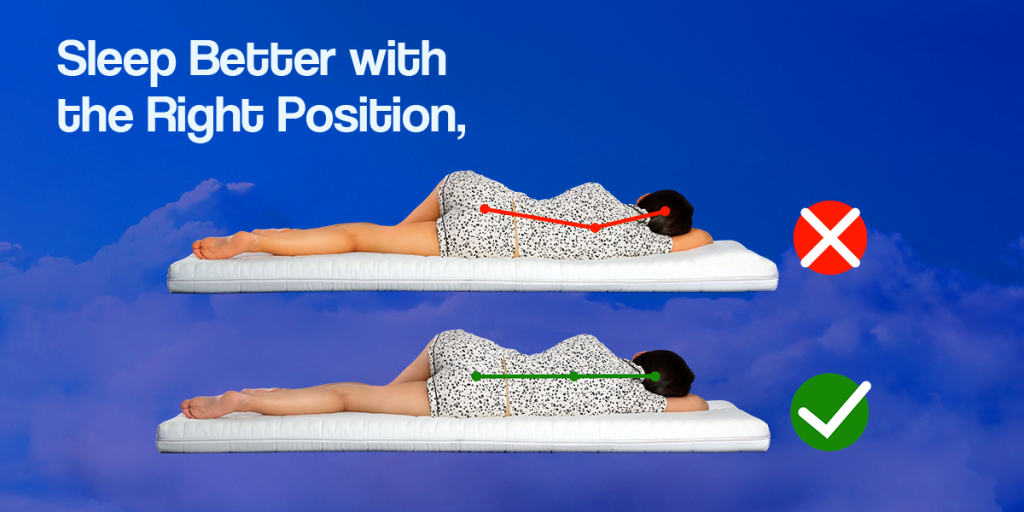
Many people enjoy this position because it feels cosy, but it is rarely a good sleeping position for long-term health.
Benefits
- May reduce snoring for some people
Things to Consider:
- Twists the neck to one side for hours
- Flattens the natural curve of the lower back and can lead to numbness or tingling in the arms and hands
Comparison of Sleep Positions
| Sleep position | Main benefits | Main drawbacks | Best suited for |
|---|---|---|---|
| Side | Good spinal support, less snoring, and acidity relief | Shoulder/hip pressure, facial wrinkles over time | Most adults, pregnancy, reflux |
| Back | Even weight, less joint pressure | More snoring, higher reflux and apnoea risk | People without snoring or reflux |
| Stomach | May reduce snoring | Neck and back strain, nerve pressure | Short-term only, not ideal long-term |
So, What is the Best Sleeping Position Overall?
For most people, side sleeping is often the best lying position because it balances comfort and health benefits. It helps the spine stay neutral, keeps the airway more open, and can ease acidity after spicy or late-night meals.
However, there is no single perfect answer. The ideal position to sleep depends on your body and health needs. For you, the good sleeping positions are the ones that keep you comfortable and supported.
If you have lower back pain
- Sleep on your side with a pillow between your knees on a medium-firm mattress
- Keep your knees slightly bent rather than tightly curled
If you snore or have mild sleep apnoea
- Favour side sleeping instead of lying flat on your back, and raise the head of your bed slightly using blocks or aWedge pillow
- Avoid heavy dinners, alcohol and smoking close to bedtime
If you are pregnant
- Doctors usually recommend sleeping on the left side in the second and third trimester
- Use pillows between your knees and under your bump, and avoid long periods on your back
If you struggle with acidity or reflux
- Sleep on your left side whenever possible
- Have your last heavy meal at least two to three hours before bed, and raise the head end of the bed if nighttime acidity is frequent
How to Improve Your Sleep Posture in Any Position
Even a good sleep position can cause problems if your bed setup is wrong. Small changes to your pillow and mattress can turn an average night into deeper sleep.
Choose the right pillow
- For side sleepers: A thicker pillow that fills the space between the ear and the shoulder
- For back sleepers: A medium-height pillow that keeps the neck in line with the rest of the spine
- For stomach sleepers: A very thin pillow or no pillow under the head
Check Your Mattress and Bed Base
In many Indian homes, mattresses are kept for far longer than recommended. Signs you may need a change include sagging, deep body impressions and waking with more pain than you had at bedtime.
Aim for a mattress that supports your favourite sleeping pose: medium-firm is often comfortable for side and back sleeping, while very hard surfaces may increase pressure on hips and shoulders.
Support from Simple Props
You do not always need special products. Everyday items can help you maintain a good sleeping posture:
- A rolled towel under the neck or lower back
- A small cushion between the knees for side sleeping
When to Speak with a Doctor or Sleep Specialist
If you wake up gasping or choking, snore loudly most nights or feel persistent pain or numbness in your back, neck or limbs, it is wise to consult a doctor or sleep specialist. Conditions like sleep apnoea, severe arthritis or slipped disc need proper assessment and treatment.
The Bottom Line
Your sleep position is not about perfection; it is about support. For most people, side sleeping with a supportive pillow and mattress is a safe starting point. From there, notice how your body feels in the morning and fine-tune your setup.
Small adjustments – a pillow between the knees, a slightly raised head end, or a better-quality mattress – can turn your usual sleeping pose into the best sleeping position for your body. With a bit of attention and experimentation, you can move towards nights that are truly restful and mornings when you feel ready for the day, not desperate for another nap.
FAQs
A medium-firm mattress is the best choice for maintaining proper sleep posture, as it keeps the spine in a neutral alignment without sinking or excessive stiffness. Memory foam and hybrid mattresses offer balanced contouring and support, helping reduce pressure points and supporting the natural curve of the spine.
Sleeping on your left side can improve circulation because it reduces pressure on major blood vessels and supports healthier blood flow. Elevating your legs slightly with a pillow can also help reduce swelling and improve venous return, especially for people who stand for long hours or experience leg fatigue.
For seniors, side sleeping—especially on the left—is often the healthiest because it supports spinal alignment, improves breathing, reduces acidity, and is easier on joints. A medium-firm mattress and supportive pillows around the knees and neck can further reduce stiffness and morning discomfort in older adults.
Sleeping on your left side is the best position to reduce bloating and gas. This posture supports better digestion, helps the intestines work with gravity, and reduces trapped gas. Avoid lying flat on your back after a heavy meal, as it can worsen discomfort and slow digestion.
Sleeping in a slightly elevated position—using a wedge pillow or raising the head of the bed—helps reduce nighttime coughing by preventing mucus drainage into the throat and reducing acid reflux. Side sleeping, especially on the left, also keeps the airway more open compared to lying flat on your back.