
If you live with nagging back pain, your mattress can feel like a curse every morning. The wrong bed leaves you stiff and tired; the right one eases strain and helps you wake up fresher. Choosing the best mattress for lower back issues is about matching support, firmness, and material to your body, not picking the costliest model in the shop.
This guide explains what to look for in a mattress for lower back pain, which materials suit Indian homes, and quick checks that help you avoid an expensive mistake.
Why Your Mattress Matters for Lower Back Pain
Your spine has a natural S-shape, and your mattress should let that curve rest in a neutral position. Too soft and your hips sink; too hard and your shoulders and hips take all the pressure.
Over time, the wrong mattress can:
- Increase morning stiffness
- Worsen lower back aches
- Disturb your sleep
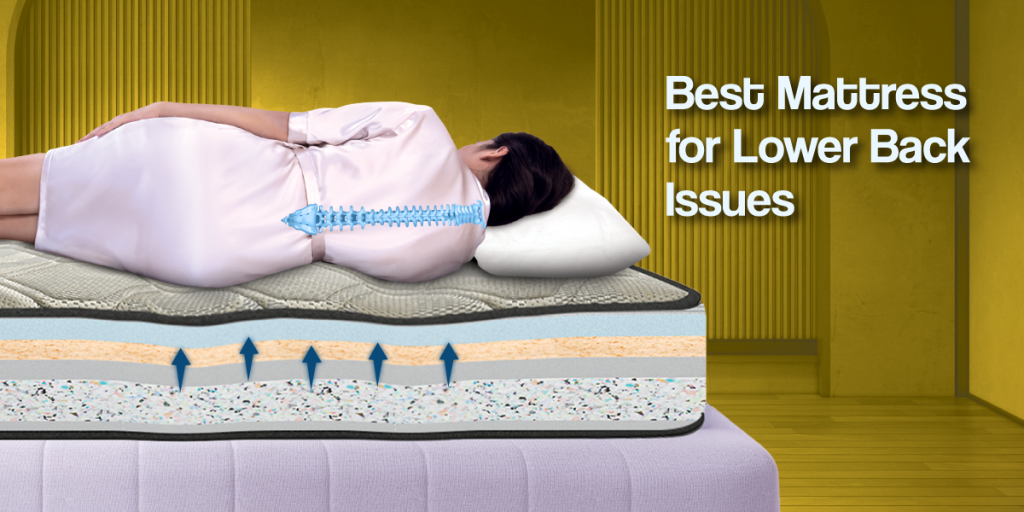
A good Back pain relief mattress keeps your spine aligned, spreads body weight, and eases pressure on the lower back so muscles can relax.
Key Features of the Best Mattress for Lower Back Issues
1. Firmness level: soft, medium, or firm?
Most people with lower back pain do well on a medium–firm mattress. You want enough firmness to support the spine and enough cushioning for comfort.
As a rough guide:
- Under 60 kg: medium to medium–soft
- 60–90 kg: medium–firm
- Above 90 kg: firm or medium–firm with strong support layers
Test the mattress for 10–15 minutes in your usual sleeping position. If your lower back feels relaxed and you can turn easily, that mattress for lower back support deserves a place on your shortlist.
2. Support and spinal alignment
Support is not the same as softness. A mattress can feel cosy on top yet sag in the centre, which is bad for lower back issues.
Look for:
- Little or no sagging in the middle
- Even support from head to toe
- Ears, shoulders, and hips in one line when seen from the side
Ask someone to click a photo of you lying sideways; you will see at once if your spine is straight or dipping.
3. Material type: foam, latex, spring, or hybrid
Each material behaves differently. Here is a quick comparison, especially for buyers in India.
Comparison of Mattress Types for Lower Back Support
| Mattress type | feel | Helps with | Watch out for |
|---|---|---|---|
| Memory foam | Medium to medium–firm | Pressure relief | Heat build–up; cheap foam sagging |
| Latex (natural) | Medium–firm to firm | Support and cooler sleep | Higher price |
| Pocket spring | Medium to firm | Airflow; heavier bodies | Pressure points in low–quality units |
| Foam + spring hybrid | Medium–firm | Balance of comfort and support | Higher cost; can be heavy |
For many people, a medium–firm memory foam or hybrid back pain relief mattress suits everyday use. Latex is also a strong choice if you prefer something bouncier and cooler, especially in humid Indian cities.
Should You Buy an Orthopaedic Mattress?
In India, the term orthopaedic mattress is used quite freely, and many products treat it as a marketing word. A genuinely supportive orthopaedic mattress usually aims to:
- Offer firm, uniform support
- Keep the spine aligned
- Reduce pressure around joints
Consider an orthopaedic option if:
- You have long–term lower back issues
- Your doctor has suggested a firmer bed
- Your current soft mattress makes you sink in and wake up sore
Do not depend only on the label. Check the layers, firmness, and warranty. When in doubt, ask your orthopaedic doctor if a change in your sleeping surface is advisable for your specific condition.
Matching Your Mattress to Your Sleeping Position
Back sleepers
If you mostly sleep on your back, a medium–firm mattress for lower back support usually works well. Look for gentle cushioning under the hips and shoulders with a strong support layer underneath. Your lower back should feel supported, not hanging or arched.
Side sleepers
Side sleepers need more cushioning around the shoulders and hips so that these areas do not feel jammed. A slightly softer top layer on a supportive base can work nicely. Memory foam and some hybrid designs are often good options for this group.
Stomach sleepers
Sleeping on your stomach is not ideal for lower back issues because it can increase the curve in your spine. If this is the only way you can sleep, pick a firmer mattress and a thinner pillow so that your neck is not strained.
Other Factors Indian Buyers Should Consider
When choosing the best mattress for lower back issues in India, also think about:
- Heat: Foam can feel warm. In hotter cities, prefer breathable covers, gel foam, or latex.
- Bed base: A broken or uneven cot ruins support. Keep the frame sturdy and level.
- Trial period: Many brands offer long trials.
- Hygiene: If you are dust–sensitive, use hypoallergenic covers and a washable protector.
- Budget: Pay for support and reliability, not fancy names.
Simple Checks for Your Current Mattress
Not ready to buy a new bed yet? Try these quick checks:
- Stand back and see if the mattress has visible dips or lumps.
- Lie on your back and slide a hand under the lower back; if there is a big gap, the bed might be too hard.
- If you sleep better and wake with less pain on another bed, your current mattress may not be right for you.
When to Talk to a Doctor
A mattress can support recovery, but it cannot replace medical advice. Speak to a doctor or spine specialist if:
- Pain lasts for more than a few weeks.
- You feel numbness, tingling, or weakness in your legs.
- Pain is severe at night or linked with fever or weight loss.
They can decide whether a change of mattress is enough or if you need further tests, medicines, or physiotherapy.
Final Thoughts
Choosing a new mattress can feel confusing, but it becomes easier when you keep your spine at the centre of your decision. Look for a medium–firm, supportive surface, pay attention to material and build quality, and always test the bed in your usual sleeping position. With the right back pain relief mattress and healthy daily habits, you give your spine a better chance to heal.
FAQ
Yes. A mattress that is too soft causes your hips to sink, while one that is too firm increases pressure on the spine. Both can misalign your lower back and worsen pain. The right mattress keeps your spine neutral, distributes weight evenly, and reduces strain on back muscles.
Most people take 2–4 weeks to fully adjust to a new mattress. Your body needs time to adapt to the new support and alignment. Mild discomfort in the first few days is normal, but if pain persists beyond a month, the firmness or material may not be right for you.
A mattress thickness of 6 to 10 inches suits most people with lower back pain. Heavier sleepers or those needing extra support may prefer 8–10 inches, while lighter individuals can be comfortable with 6–8 inches. The quality of support layers matters more than thickness alone.