
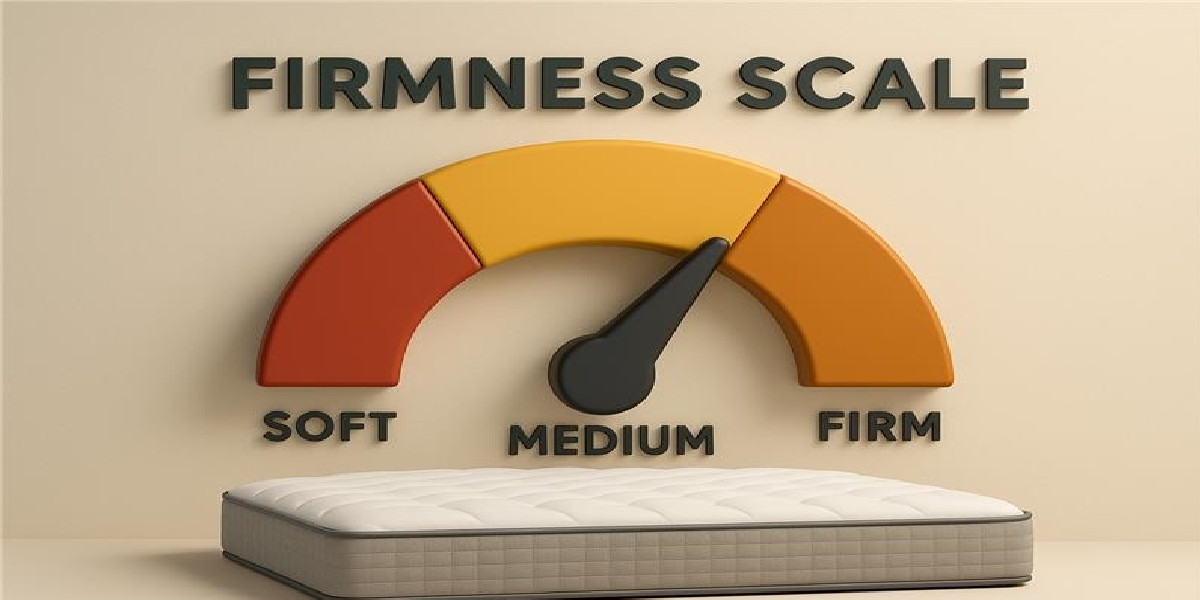
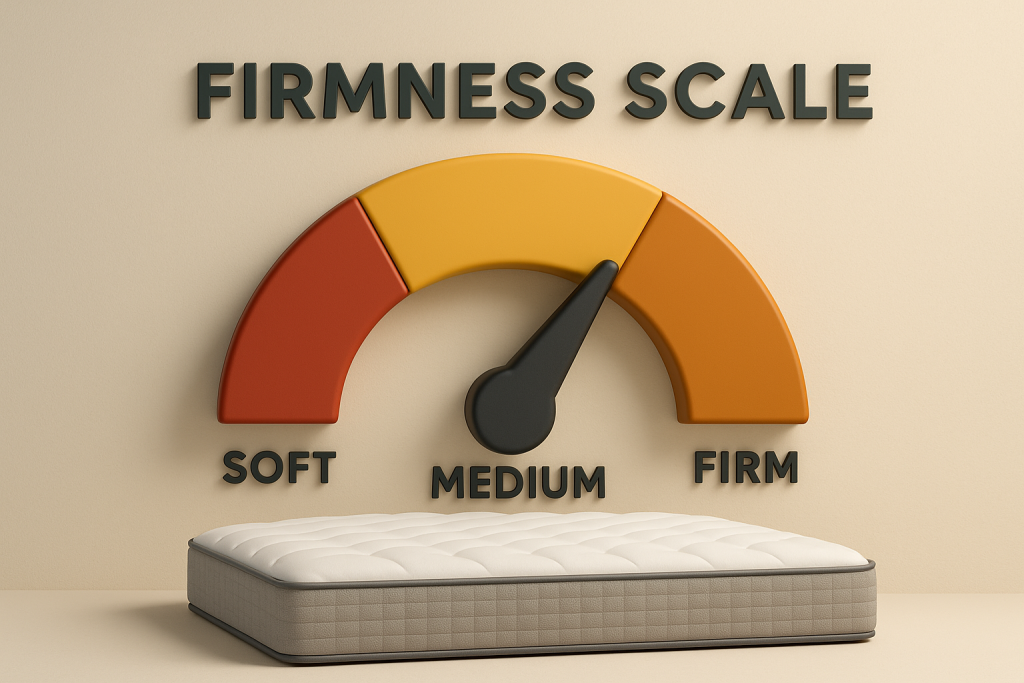
The firmness of a mattress determines the manner in which you sleep each night. Soft relieves pressure, medium is more comfortable and in control, and firm mattress maintains the spine in place. The correct option varies according to body weight, sleep position and history of pain.
This guide describes each of the feels, who they work with and tests you can experiment with before purchasing. It also demonstrates how Centuary Mattresses brands firmness and support through Ortho Foam, Green Gel as well as useful cores, and then you can readily shortlist the best most comfortable mattresses with certainty.
What Firmness Actually Means
Think of firmness as a comfort dial. Lower settings feel plush and hugging. Higher settings feel flat and resistant. Most sleepers settle in the middle because it allows easy position changes and reduces shoulder and hip pressure. Fit also depends on body weight, pillow height, and the base under the mattress.
The Quick Firmness Scale
Most brands use a 1 to 10 guide. One is very soft. Ten is very hard. The table below shows the practical bands people shop.
| Firmness band | Typical feel | Suits whom | Body weight guide | Common materials |
|---|---|---|---|---|
| Soft 3-4 | Deep hug and plush cradle | Side sleepers with sharp shoulder or hip pressure | Under 60 kg | Memory foam comfort layers, soft latex, plush quilting |
| Medium 5-6 | Balanced give and support | Combination sleepers and couples | 60 to 90 kg | Responsive foams, latex, pocket springs with medium gauge |
| Medium to firm 6-7 | Stable surface with light contour | Back or stomach sleepers, mild lumbar strain | 70 to 100 kg | Zoned pocket springs, denser foams, latex over coils |
| Firm 8-9 | Flatter feel with minimal sink | Stomach sleepers and heavier bodies | 90 kg plus | Rubberised coir cores, high-density foams, tight spring units |
Who Should Choose Soft, Medium, or Firm?
Let’s understand the choice:
- Soft: Soft works for strict side sleepers who wake with tingling arms or sore hips.
The surface lets the shoulder and hip nestle in, which reduces pinching and helps the mid back relax.
Petite bodies also read beds as firmer, so they often like soft more than heavier sleepers. - Medium: Medium is the crowd pleaser. It balances contour and control, so couples with
different builds often meet in this middle. Guests feel at home on it because it rarely feels extreme.
If you change positions at night, this zone gives freedom without losing support. - Medium to firm: A medium to firm mattress offers a calm, level platform. Back sleepers
who want clear lumbar support usually do well here. Stomach sleepers benefit because the pelvis stays lifted,
which reduces arching in the lower back. Many office workers who sit long hours report less morning stiffness in this range. - Firm: A firm mattress suits people who like sleeping on the surface rather than in it.
Heavier bodies get better alignment because the core does not compress too much. Side sleepers can find the firm a little severe.
If you prefer firm but sleep on your side, add a pressure-relieving pillow and consider a softer top layer.
Materials That Influence Feel
Here are key materials that enhance the feel:
- Memory foam: Memory foam contours closely and eases pressure at bony areas.
Higher density feels firmer and lasts longer. - Latex: Latex is buoyant and responsive. It feels springy rather than slow and is naturally breathable.
- Pocket springs: Pocket springs give targeted response and airflow.
Coil gauge and zoning in the middle third fine-tune back support. - Rubberised coir: Rubberised coir forms a naturally firm and airy base that resists sagging.
- Hybrid builds: Hybrid builds blend coils with foam or latex so brands can tune the exact comfort level.
How to Test Firmness
Here are key tests you can conduct:
- Lie on your regular side for five minutes. Your shoulder should settle without a jammed feeling.
- Roll onto your back. Slide a hand under your lower back. A large gap means too firm. Hips dropping means too soft.
- If you sometimes sleep on your stomach, test that position. Notice whether your lower back starts to arch.
- Sit on the edge and tie your shoes. Severe collapse hints at weak long-term support.
- Try two pillow heights. The wrong pillow can push you toward the wrong firmness.
Where Centuary Fits in
Centuary Mattresses is an Indian-based manufacturer of rubberised coir established in 1988 and now known as a brand of mattresses and sleeping solutions in Indian households. The company has integrated the best infrastructure in the world, certified processes and patented technology to provide comfortable and durable products. It is the initial Indian manufacturer of mattresses to obtain ISO 9001-2015 certification of its quality management system.
Innovations like Ortho Foam to provide posture support and Green Gel technology to provide cooler comfort were made by Centuary. The brand is number two in India as a coir manufacturer and number three as the best Indian mattress brand. Centuary is also distributing and exporting high-quality natural and environmentally friendly rubberised coir as a bedding material, furniture, and seating.
The company is currently exploring ways to create alternatives to meet various sleep requirements, even as it pursues healthier and more productive sleep and has over 1,200 employees.
Shoppers who look for the top most comfortable mattresses want proof behind the promise. Centuary’s focus on reliable materials, transparent specifications, and clear firmness labels makes selection simple. This helps buyers pick a firm mattress for posture, a medium to firm mattress for shared beds, or a balanced medium for mixed sleepers.
Buying Checklist
Here is a buying checklist:
- Know your primary sleep position and list pain triggers.
- Match firmness to body weight and posture goals.
- Ask for foam density or coil gauge to predict durability.
- Consider motion control if you share a bed.
- Review trial terms and exchange options before checkout.
Conclusion
Whether or not to be firm is a matter of choice, although trends assist. Soft relieves the strain in hard side sleepers. Most homes are fitted with medium balances. The medium to firm mattress or firm mattress holds the back and stomach sleeper’s spine stable.
Centuary Mattresses converts these regulations into definite commodity choices of Ortho Foam, Green Gel, and strong coir and coil systems. The next option is to browse models and firmness labels at Centuary India, filter by thickness and material, and select the support that takes you deeper into more consistent sleep.